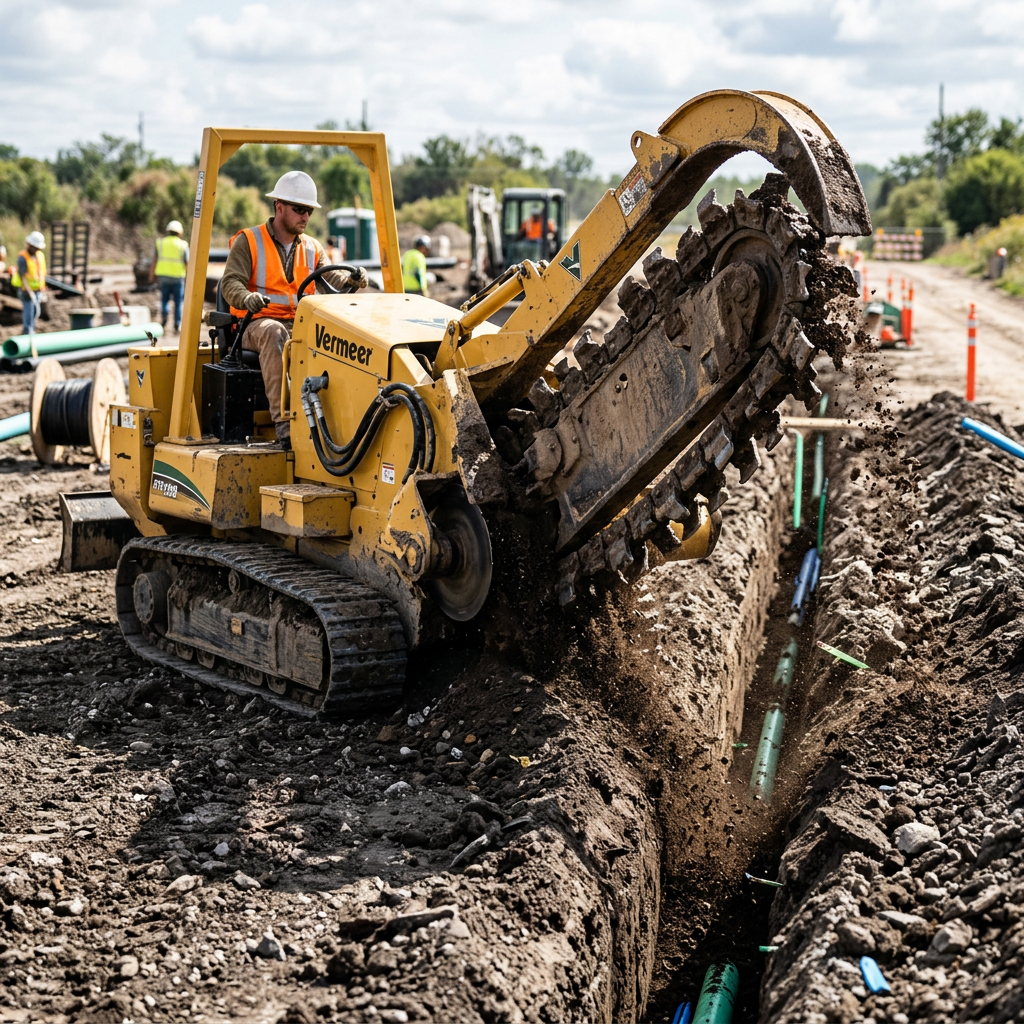
Trencher
trenching
Wheeled
A machine specifically designed to dig narrow, defined trenches for installing pipes, cables, and drainage systems.
Primary Purpose
Cutting narrow trenches for utilities, drainage, and piping
Common Attachments
Chain trencher, Wheel trencher, Micro trencher
Advantages
- Fast, efficient trench cutting
- Clean trench walls
- Consistent depth and width
- Less disturbance than excavator trenching
Limitations
- Only for trench cutting
- Cannot handle rock without special teeth
- Limited to specific widths
Beginner Tip
If you need a long, narrow trench for a pipe or cable, a trencher is usually the fastest option.
Best For
Long runs of narrow, consistent trenches
Not Ideal For
Wide excavation, deep digging, or material handling
Common Confusion
Trenchers make narrow trenches efficiently. Excavators can also trench but are better for wider or deeper work.
Safety Reminder
Always locate underground utilities before trenching. Keep hands and feet away from the cutting chain. Wear hearing protection.
Common Job Site Uses
Utility trenchingDrainage installationIrrigation linesCable laying
Key Features
Chain or wheel cutting mechanism
Adjustable depth
Compact models available
Walk-behind and ride-on options
Pre-Start Inspection Checklist
Critical checks before operating this equipment
Check engine oil, hydraulic fluid, and fuel levels
Inspect chain or wheel cutter teeth for wear or damage
Check chain tension and sprocket condition on chain trenchers
Inspect spoil conveyor system and crumb cleaner
Verify all safety guards are in place over the chain/cutter
Test depth control mechanism before digging
Check all lights and backup alarm
Test hydraulic controls for smooth engagement
Call 811 to confirm underground utilities are marked before trenching
Verify trench alignment with project plans before starting
Powered by SteelStamp
Start Inspection →