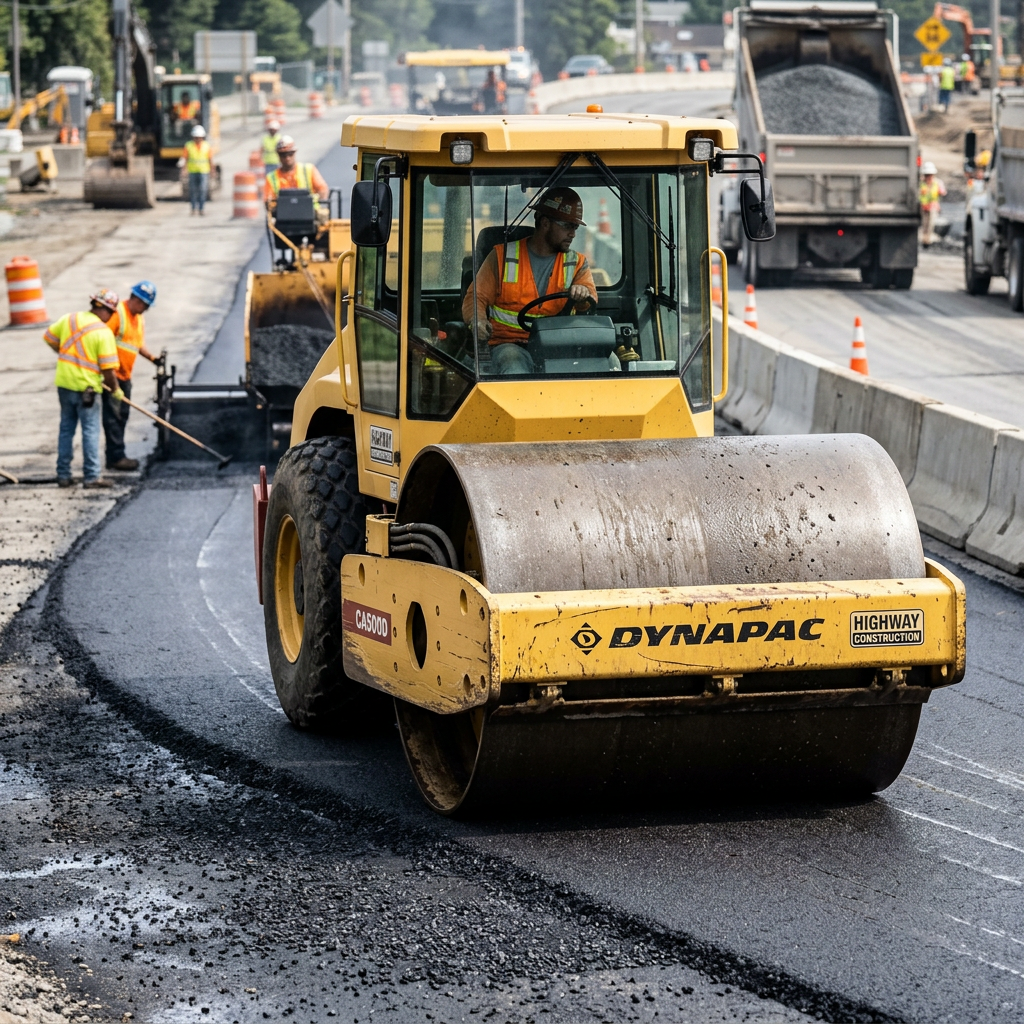
Roller / Compactor
compaction
Wheeled
A machine with heavy steel drums or rubber tires used to compact soil, base material, or asphalt.
Primary Purpose
Compacting soil, gravel, or asphalt to increase density and stability
Common Attachments
Smooth drum, Padfoot drum, Rubber tire drum
Advantages
- Essential for proper compaction
- Vibratory models increase effectiveness
- Various sizes available
- Critical for road building
Limitations
- Single purpose machine
- Cannot be used for grading or digging
- Requires proper moisture content in soil
Beginner Tip
Compaction is critical. Without proper compaction, surfaces can settle, crack, or fail. The roller is the tool that makes fill material solid.
Best For
Achieving proper compaction density on soil, base, and asphalt
Not Ideal For
Digging, loading, or grading
Common Confusion
Smooth drum rollers are for asphalt and base. Padfoot rollers are for cohesive soils like clay.
Safety Reminder
Watch for other workers near the machine. Never allow anyone to ride on the drum. Be aware of vibration exposure.
Common Job Site Uses
Soil compactionRoad base compactionAsphalt compactionTrench compaction
Key Features
Heavy steel drum or rubber tires
Vibratory mechanism
Smooth or padfoot drum options
Water spray system (for asphalt)
Pre-Start Inspection Checklist
Critical checks before operating this equipment
Check engine oil, hydraulic fluid, and fuel levels
Inspect steel drum surface for damage or excessive wear
Check drum scraper bars are in contact and clean
Inspect all tires (combination rollers) for pressure
Test vibration system — engage and verify operation
Check steering and articulation joint for smooth movement
Test brakes and verify parking brake holds on a slope
Check all lights and backup alarm
Inspect water spray system for compacting asphalt (if equipped)
Walk the compaction area to identify hazards or soft spots

Powered by SteelStamp
Start Inspection →