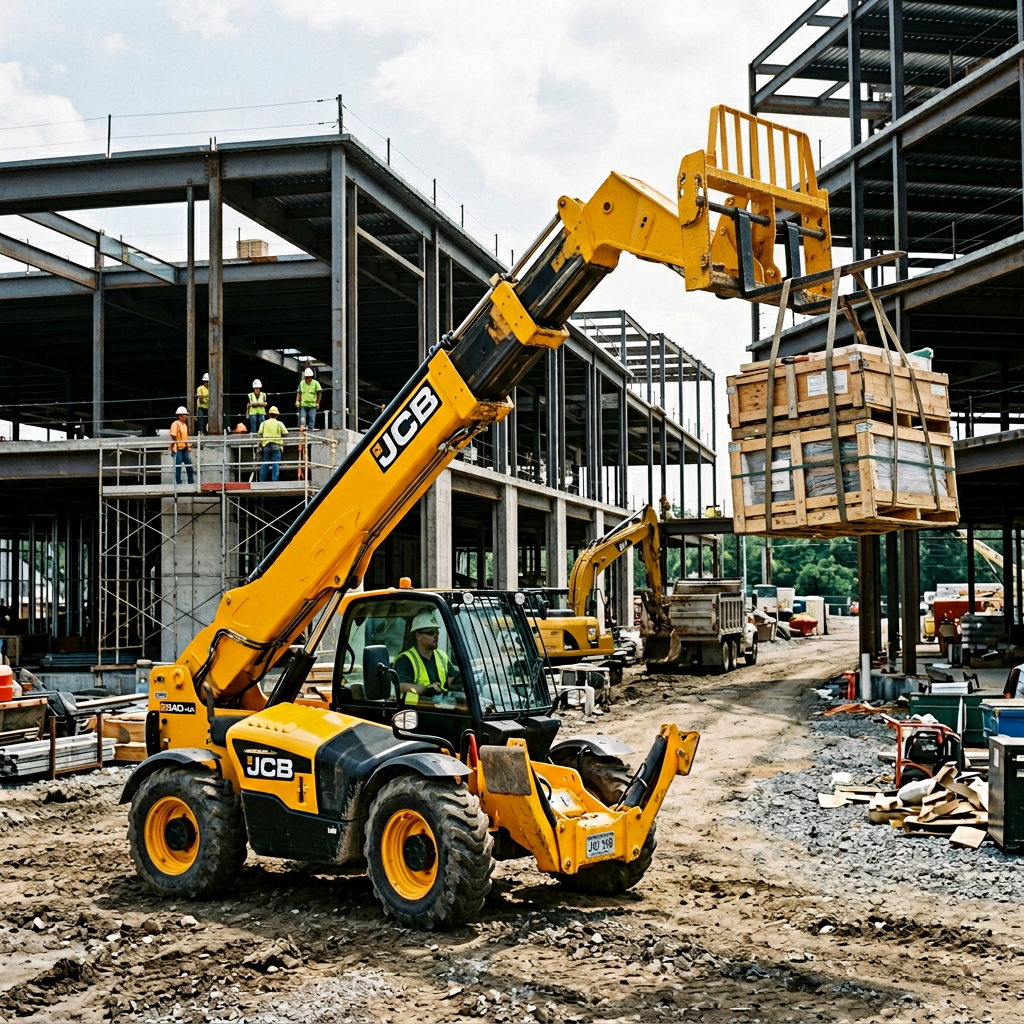
Telehandler
lifting
Wheeled
A wheeled machine with a telescoping boom that can extend forward and upward, commonly used for lifting materials on job sites.
Primary Purpose
Lifting and placing materials at height, reaching over obstacles
Common Attachments
Forks, Bucket, Work platform, Truss boom
Advantages
- Reach and height capability
- Versatile attachments
- Good for placing material at specific locations
- Mobile
Limitations
- Limited lifting capacity at full extension
- Stability concerns with heavy loads at height
- Not for digging
Beginner Tip
Think of a telehandler as a forklift with a telescoping arm that can reach further and higher.
Best For
Placing materials at height or over obstacles
Not Ideal For
Earthmoving, grading, heavy lifting beyond rated capacity
Common Confusion
Similar to a forklift but with a telescoping boom for reach. Not a crane — has different load ratings and limitations.
Safety Reminder
Never exceed load charts. Use stabilizers when required. Watch for overhead obstructions. Ensure ground is firm.
Common Job Site Uses
Placing materials at heightLoading elevated areasReaching over obstaclesRoofing material placement
Key Features
Telescoping boom
Multiple attachment points
Four-wheel drive
Stabilizers on some models
Pre-Start Inspection Checklist
Critical checks before operating this equipment
Check engine oil, hydraulic fluid, coolant, and fuel levels
Inspect all tires for pressure and wear
Check dump body hoist cylinder and pivot pins
Inspect dump bed latches and tailgate hinges
Test parking brake and service brakes before moving
Check all lights including brake lights and turn signals
Inspect body retaining cable and prop rod (used when working under raised body)
Test horn and backup alarm
Verify the haul road conditions and check load weight limits
Check mirrors and camera systems for clear visibility
Powered by SteelStamp
Start Inspection →