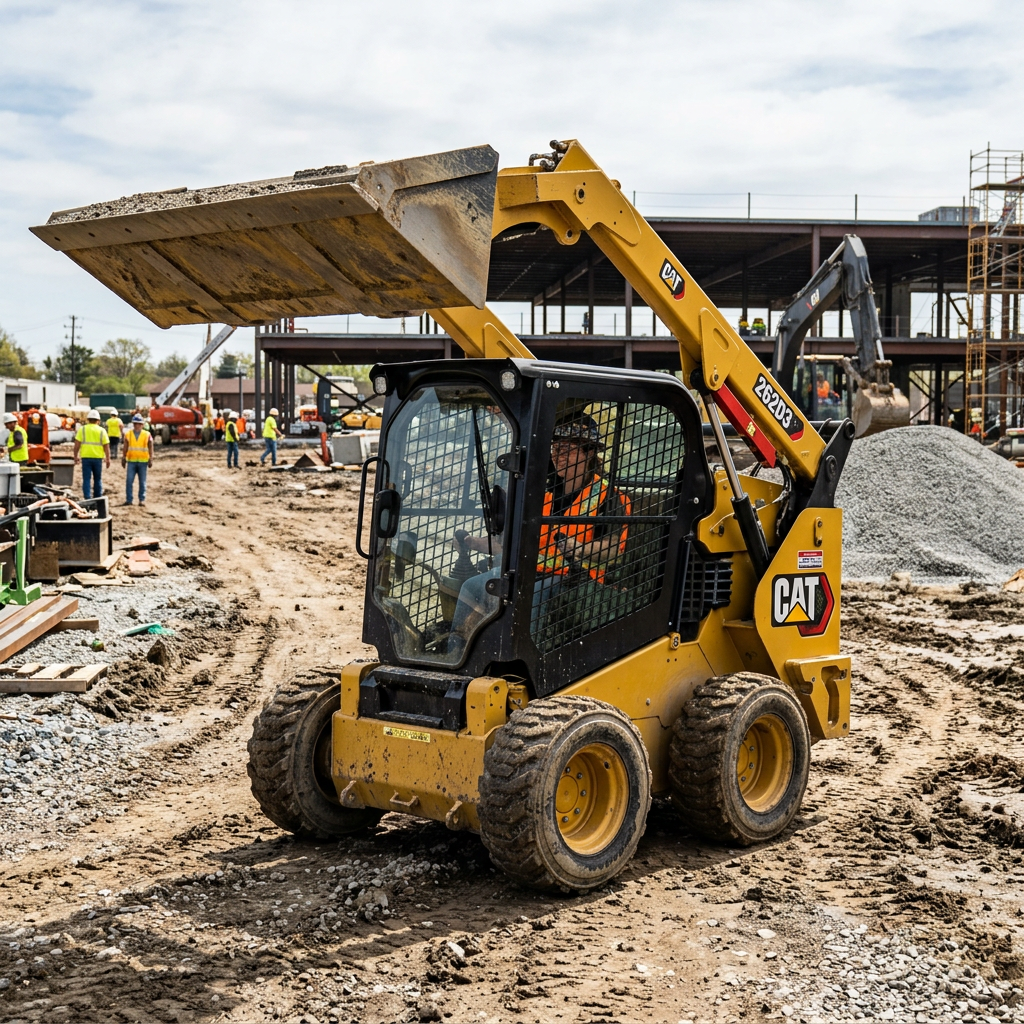
Skid Steer
A compact, wheeled machine with lift arms that can accept many attachments. Known for its tight turning radius using skid steering.
Primary Purpose
Material handling, grading, loading, and versatile utility work
Common Attachments
Bucket, Pallet forks, Auger, Trencher, Brush cutter, Sweeper
Advantages
- Extremely maneuverable
- Accepts many attachments
- Compact size
- Affordable versatility
Limitations
- Can damage turf with wheels
- Limited lift height
- Rough ride on uneven ground
Beginner Tip
The skid steer is called the 'Swiss army knife' of the job site because of how many attachments it can use.
Best For
Quick versatile tasks, tight job sites, material handling
Not Ideal For
Deep digging or working on very soft/muddy ground
Common Confusion
Often compared to compact track loaders. Skid steers have wheels; compact track loaders have tracks.
Safety Reminder
Always use the seatbelt and restraint bar. Be cautious of tipping when lifting heavy loads. Stay aware of bystanders in tight areas.
Common Job Site Uses
Key Features
Pre-Start Inspection Checklist
Critical checks before operating this equipment
Powered by SteelStamp
Start Inspection →