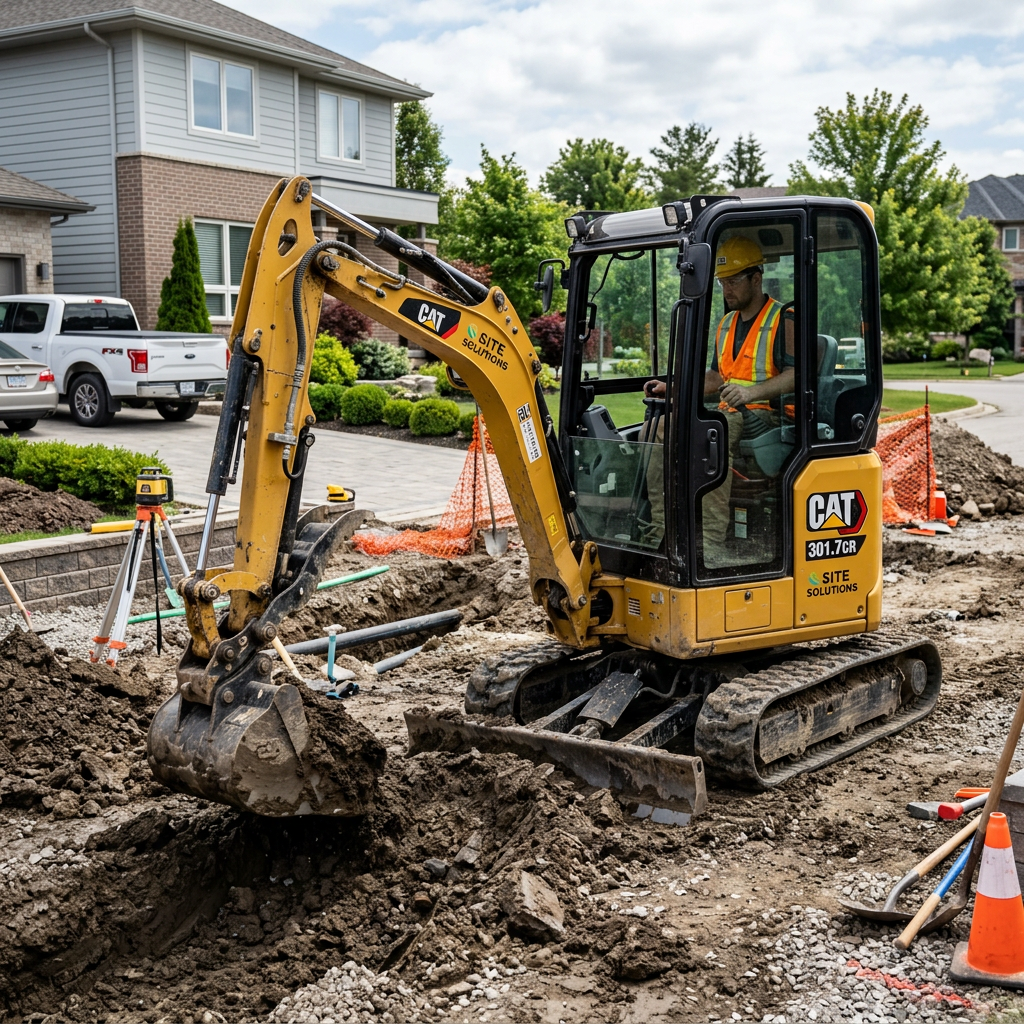
Mini Excavator
earthmoving
Tracked
A smaller version of a standard excavator designed for tight spaces and lighter digging tasks.
Primary Purpose
Small-scale digging, utility work, confined space excavation
Common Attachments
Bucket, Auger, Breaker, Thumb
Advantages
- Fits in tight spaces
- Lower ground pressure
- Easy to transport
- Versatile
Limitations
- Limited digging depth
- Lower lifting capacity
- Slower for large excavation
Beginner Tip
If you see a small tracked digger on a residential job, it is likely a mini excavator.
Best For
Tight spaces, residential projects, utility work
Not Ideal For
Large-scale earthmoving
Common Confusion
Smaller than a standard excavator but operates on the same principles. Not to be confused with a skid steer.
Safety Reminder
Watch for overhead clearances in tight spaces. Ensure stable footing on soft ground.
Common Job Site Uses
Utility trenchingLandscapingSmall foundation workPipe installation
Key Features
Compact size
Zero or reduced tail swing
Tracked undercarriage
Retractable tracks on some models
Pre-Start Inspection Checklist
Critical checks before operating this equipment
Inspect tracks, rollers, and idlers for wear or damage
Check engine oil, hydraulic fluid, and fuel levels
Inspect all pins and bushings on boom and arm
Verify retractable undercarriage width is locked in correct position
Test all hydraulic controls and check for smooth operation
Check bucket teeth and cutting edges
Inspect all hoses and fittings for leaks
Test horn, lights, and backup alarm
Ensure ROPS/FOPS canopy or cab is undamaged
Confirm the machine is on stable, level ground before operating
Powered by SteelStamp
Start Inspection →