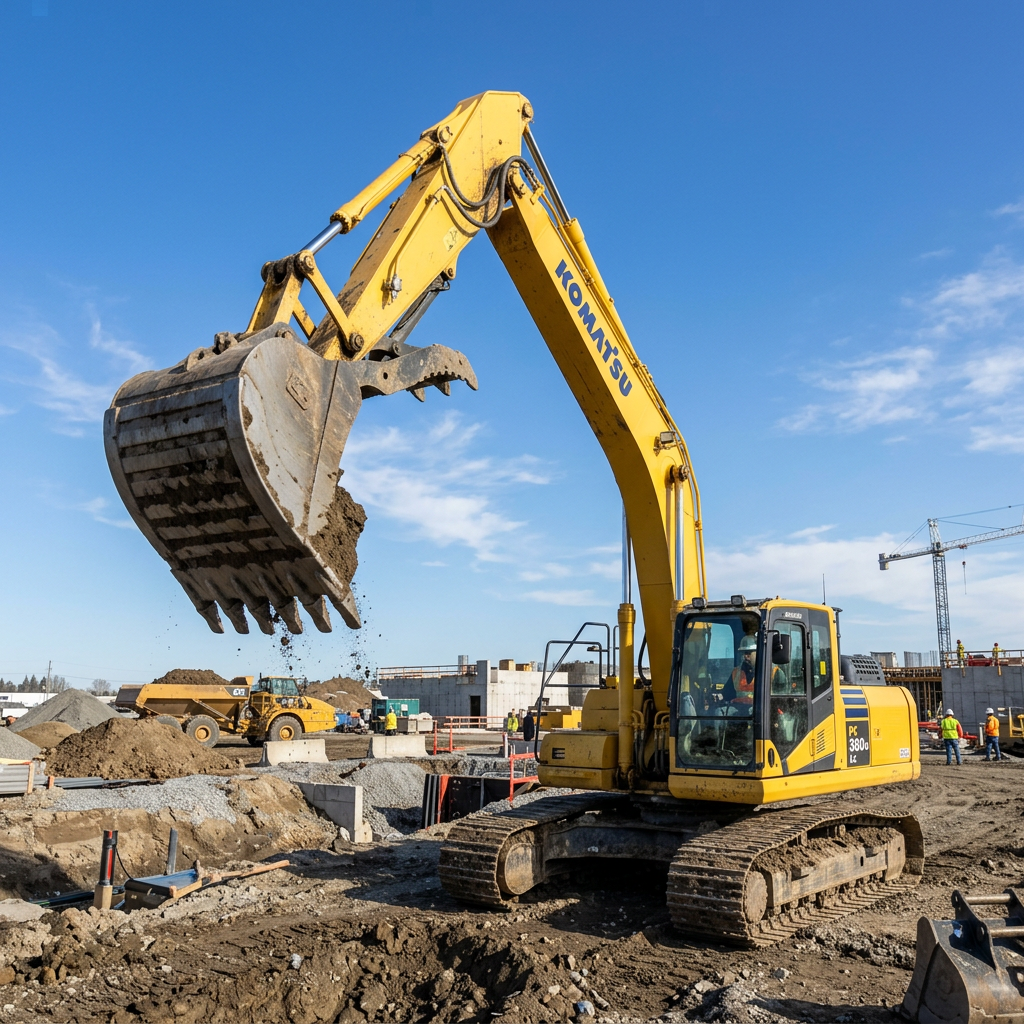
Excavator
A tracked machine with a boom, arm, and bucket used for digging below grade, trenching, and material handling. Excavators can rotate 360 degrees on their undercarriage.
Primary Purpose
Digging, trenching, lifting, demolition, material handling
Common Attachments
Bucket, Hammer, Thumb, Auger, Grapple
Advantages
- Powerful digging force
- Precise bucket control
- Full rotation capability
- Versatile with attachments
Limitations
- Slower travel speed
- Cannot drive long distances on roads
- Large footprint on small sites
Beginner Tip
The excavator is one of the most common machines you will see on job sites. Learning its parts (boom, arm, bucket) is a great starting point.
Best For
Digging below grade, trench work, tight digging control
Not Ideal For
Long-distance material hauling or fine grading of flat surfaces
Common Confusion
Often confused with backhoe, but excavators rotate fully (360°) and usually run on tracks. Backhoes are typically wheeled and have a front loader bucket.
Safety Reminder
Always check swing radius clearance. Be aware of underground utilities before digging. Never work under a raised boom without proper lockout.
Common Job Site Uses
Key Features
Pre-Start Inspection Checklist
Critical checks before operating this equipment
Powered by SteelStamp
Start Inspection →